Water Damage Risk Varies by Home Age in Aurora
Aurora's housing stock spans well over a century, from the early-to-mid 20th century homes near the historic Fletcher townsite in Original Aurora and Downtown, through post-war tract neighborhoods like Hoffman Heights, to master-planned communities built from the 1990s onward near Saddle Rock and Tallyn's Reach and toward the reservoir.
Older homes are more likely to have original or long-since-replaced plumbing materials, including galvanized steel supply lines common in mid-century construction, while newer homes are built to current code with copper or PEX lines. That difference shapes which failures are more common in a given neighborhood.
Common Residential Water Damage Situations
Basement Water Intrusion
Unfinished basements are a standard feature of Colorado homes across most eras and price points, and they're frequently where water first collects, whether from a sump failure, foundation seepage, or a burst pipe. See basement water damage and flooded basement cleanup.
Kitchen and Bathroom Appliance Leaks
Water heaters, washing machines, dishwashers, and supply lines to refrigerators and toilets are common sources of residential leaks, sometimes obvious and sometimes slow and hidden for weeks. See appliance leak and overflow cleanup.
Roof and Attic Intrusion After Storms
Given Aurora's position in Hail Alley, roof damage from hail or wind is a recurring cause of residential ceiling and attic water damage, often not discovered until the next rain. See storm and rain water damage.
What the Restoration Process Looks Like for a Home
Initial Assessment and Extraction
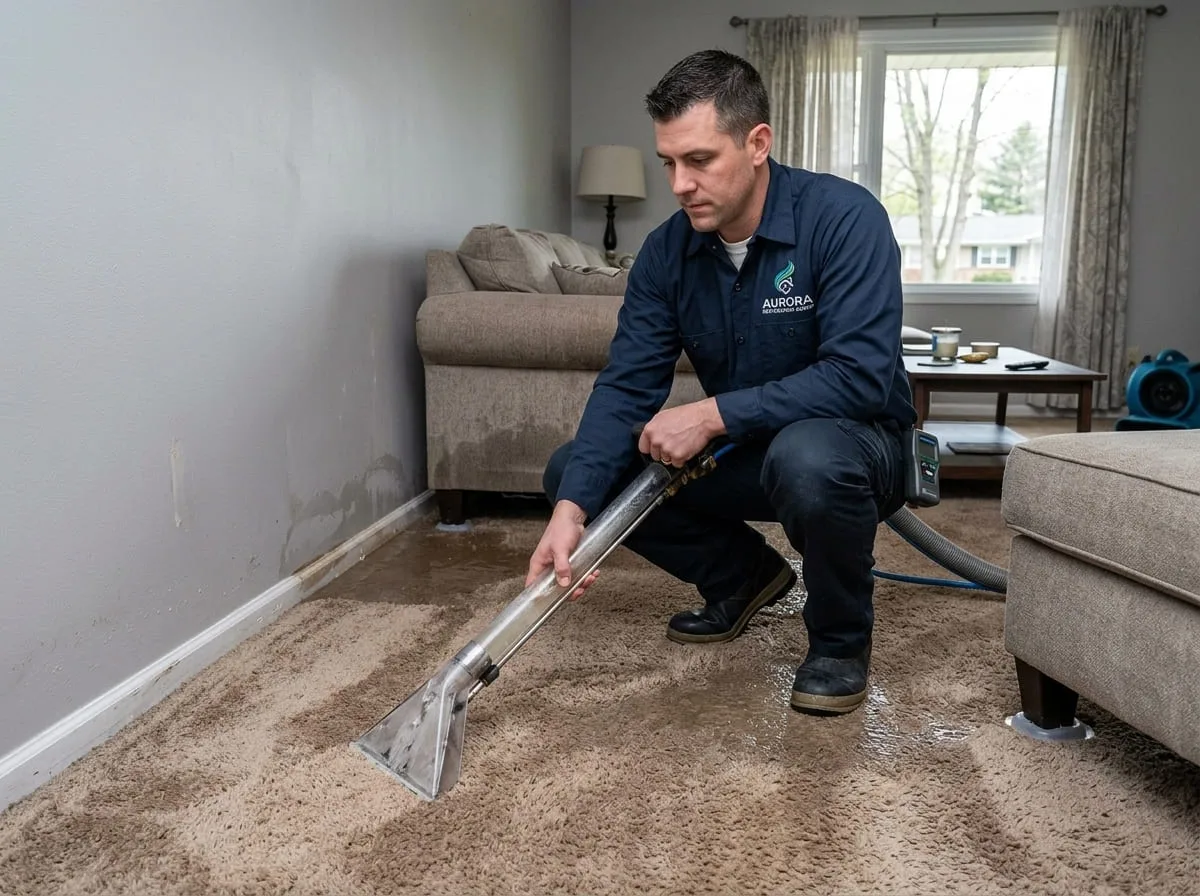
A technician assesses the water source, category, and affected rooms, then extracts standing water using portable equipment sized for residential spaces.
Drying and Daily Monitoring
Air movers and dehumidifiers are set up throughout the affected area, with follow-up visits to check moisture levels and reposition equipment as materials dry.
Repairs and Rebuild
Once the structure is dry, any needed repairs, drywall, flooring, trim, or paint, are handled by the same licensed contractor network, so homeowners aren't managing separate vendors for each stage.
Working With Your Insurance
Insurance claim assistance is available through the receiving restoration contractor, including documentation of the damage, moisture readings, and a written scope of work that supports the claims process.
Related Residential Situations
For a home affected by a plumbing failure specifically, see burst pipe water damage. For hardwood floors that cupped or warped after a leak, see hardwood and flooring water damage.
What to Expect During the First Visit
The first visit typically includes a walkthrough of affected rooms, moisture readings taken with a meter, photos for documentation, and an explanation of the planned extraction and drying approach before equipment is set up. Homeowners are generally walked through what to expect over the following days rather than left guessing.
Rental and Multifamily Residential Properties
Water damage in a rented home or a unit within a larger multifamily building often involves an added layer of communication between tenant, owner, and property manager, since access, scheduling, and responsibility for repairs can differ from a typical owner-occupied home. The extraction and drying process itself follows the same principles regardless of ownership structure.
Seasonal Patterns in Residential Water Damage
Aurora sees a noticeable seasonal shift in the type of residential water damage call: late spring through summer brings more storm and hail-related roof intrusion, while winter cold snaps bring more burst-pipe calls tied to the region's freeze-thaw pattern. Appliance leaks and plumbing failures happen year-round independent of weather.
Choosing Between Repair and Replacement
Not every affected material needs replacing, and not every material can be saved. The decision generally comes down to the water's contamination category, how long materials were wet, and moisture readings taken during assessment, rather than a blanket rule applied to the whole property.
Residential Water Damage Tied to Specific Rooms
Kitchens and Laundry Rooms
These rooms concentrate several appliance and plumbing connections in a small area, which makes them one of the more common sources of a residential water call. See appliance leak and overflow cleanup for the specific failure points involved.
Bathrooms
Toilet overflows, supply line failures at a sink or tub, and shower pan leaks are common bathroom-specific causes, sometimes affecting the ceiling of the room directly below on a multi-story home.
A Straightforward Point of Contact
Rather than coordinating a plumber, a separate drying company, and a general contractor, residential water damage restoration is handled through one licensed contractor network from initial extraction through any final repairs, which simplifies the process for a homeowner already dealing with a stressful situation.
Residential Water Damage Across Aurora's Neighborhoods
From established streets near Hoffman Heights to newer construction toward Saddle Rock and Tallyn's Reach, residential water damage response covers homes across the full range of Aurora's housing stock, with the specific plumbing and construction details of each home factored into the assessment.
Preparing Your Home Between Events
Knowing where the main water shut-off valve is located, checking supply hoses periodically, and keeping gutters clear ahead of storm season are all reasonable habits that reduce the chance of a residential water event, even though no amount of preparation eliminates the risk entirely.
When to Call for an Assessment Even Without Visible Damage
A musty smell, an unexplained rise in the water bill, or a neighbor's recent water damage from the same storm or cold snap are all reasonable prompts to have a property checked, even without an obvious leak, since some damage isn't visible until it has progressed further.
Frequently Asked Questions
How is residential water damage restoration different from commercial work?+
Residential jobs are generally sized for household-scale equipment and scheduled around a family's living situation, while commercial jobs often involve larger square footage, multiple tenants, and a priority on minimizing business downtime.
Can I stay in my home during water damage restoration?+
In many cases, yes, especially when only one or two rooms are affected and the water was clean rather than contaminated. Sewage backups or extensive damage may require temporarily avoiding the affected area for safety.
Will my homeowners insurance cover the restoration work?+
Coverage depends on the cause; sudden events like a burst pipe or appliance failure are typically covered, while gradual leaks or excluded perils may not be. Insurance claim assistance is available through the receiving contractor to help document and support the claim.
Does an older Aurora home need a different approach than new construction?+
The drying approach is similar, but older homes may have plumbing materials, like galvanized steel, that are more prone to future failures even after the current damage is repaired, which is worth flagging to a homeowner during the assessment.
What happens after the drying equipment is removed?+
A final moisture check confirms materials have reached normal levels before equipment is pulled. If repairs or reconstruction are needed, those are scheduled as a next phase rather than being left for the homeowner to coordinate separately.