Appliances Are a Leading Cause of Residential Water Damage
Unlike a storm or a burst pipe tied to a specific weather event, appliance-related water damage can happen any time of year, and it's often the result of a slow failure that goes unnoticed until it's caused significant damage to flooring and cabinetry nearby.
Common Appliance and Fixture Failures
Water Heaters
A water heater tank can fail gradually through corrosion or suddenly through a fitting failure, and because many water heaters sit in a basement or utility closet, a failure can go unnoticed for a while, particularly in the unfinished basements common throughout Colorado homes.
Washing Machines
Supply hoses, especially older rubber hoses rather than braided steel, are a common failure point, and a full hose burst can release a large volume of water quickly, often into a laundry room with flooring not designed for sustained water exposure.
Dishwashers and Refrigerator Ice Makers
Both appliances use supply lines that can develop small leaks over time, often going unnoticed under cabinetry until flooring or subfloor nearby starts to show damage.
Toilets and Overflowing Fixtures
A clogged toilet or a supply line failure at a sink or tub can overflow onto flooring, and depending on the fixture, that water may be clean or may carry contamination that changes how the cleanup is handled.
What Happens During Cleanup
Stopping the Source and Extracting Water
The first step is shutting off the specific appliance or fixture's water supply, then extracting standing water from the affected floor and any adjacent rooms it reached.
Checking Flooring and Cabinetry
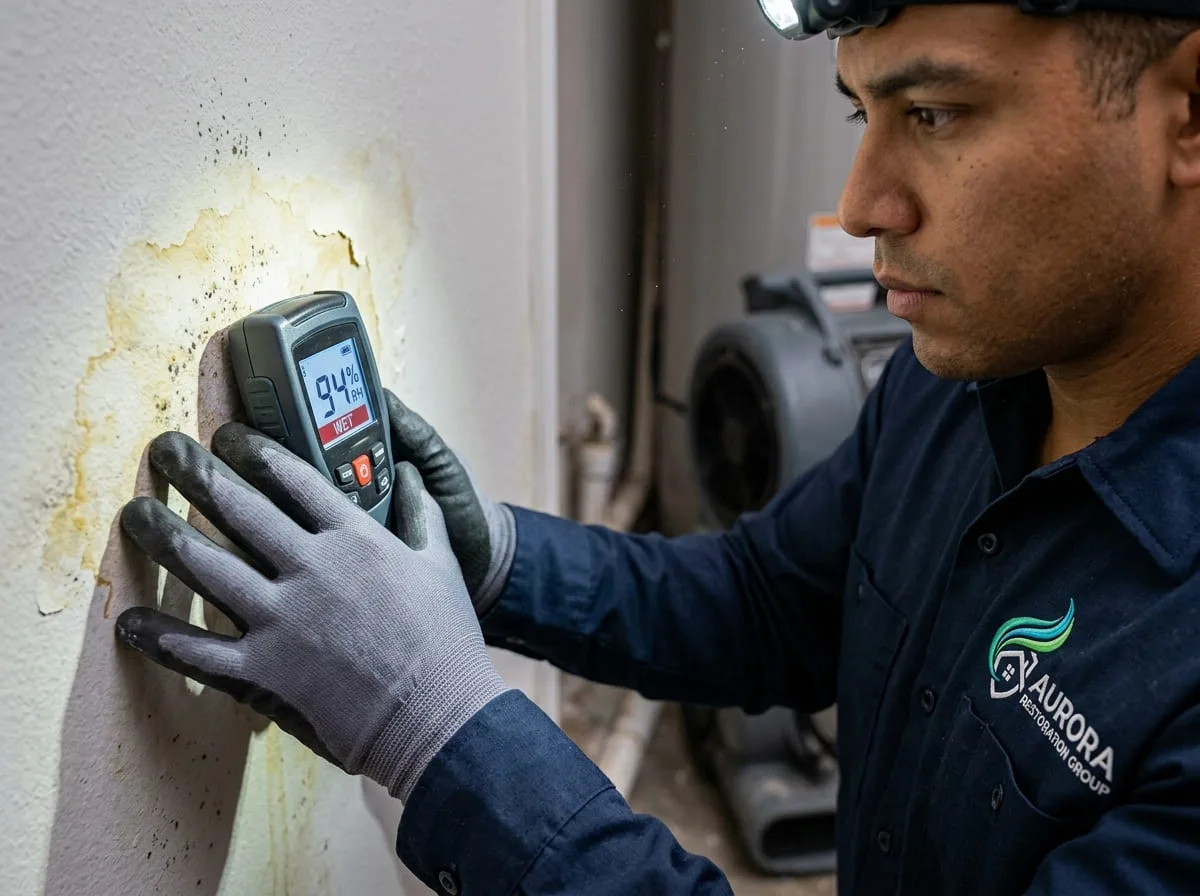
Because appliance leaks are often near cabinetry and flooring transitions, technicians check underneath and behind these areas for moisture that isn't visible from a normal view of the room.
Drying and Assessing Long-Term Damage
Drying proceeds the same way as other water damage jobs, with moisture monitored until materials reach normal levels. If flooring has cupped, warped, or delaminated, that's assessed separately, since not all flooring recovers even after proper drying. See hardwood and flooring water damage for more.
When an Appliance Leak Goes Unnoticed for a While
If a leak has been present long enough to reach a lower floor or basement, review basement water damage and flooded basement cleanup. If it's been going on long enough to raise mold concerns, see mold prevention and moisture control for what a moisture assessment involves.
For general guidance on what to do the moment you find any kind of water damage, see what to do immediately after finding water damage.
Other Household Sources Worth Checking
HVAC Condensate Lines
Air conditioning and furnace condensate lines can clog or disconnect, leading to a slow drip near a mechanical closet or attic unit that's easy to miss until it's caused visible staining nearby.
Water Softeners and Filtration Systems
Whole-house water treatment equipment has its own connections and drain lines, and a failure there can behave similarly to any other appliance leak, often in a utility area not checked daily.
Preventive Maintenance That Reduces Appliance Leak Risk
Periodically checking supply hoses for wear, replacing a water heater near the end of its expected service life before it fails outright, and inspecting under sinks for early signs of moisture are all reasonable habits that catch small problems before they become a full cleanup.
Commercial Appliance and Equipment Leaks
Commercial kitchens, laundry facilities, and mechanical rooms often run larger-capacity equipment than a home, and a failure there can release more water more quickly. See commercial water damage restoration for how that scale of response is handled.
Appliance Leaks and Flooring Damage
Because appliances usually sit directly on flooring, a leak that goes unnoticed for even a short time can affect the surrounding material before it's discovered. See hardwood and flooring water damage for how cupping, warping, and subfloor moisture are assessed after a leak like this.
Why a Small Leak Still Warrants a Proper Look
Even a leak that seems minor, a slow drip under a sink or a small puddle by the dishwasher, can indicate a connection or seal that's failing and about to get worse. Addressing it as a real water damage event rather than just wiping it up helps confirm nothing was missed underneath cabinetry or flooring.
Appliance Leaks in Older vs. Newer Homes
Older homes with original plumbing fixtures and supply lines may be more prone to fitting failures simply due to age, while newer homes generally have more recent connections but aren't immune to a defective part or improper installation causing an early failure.
Coordinating Appliance Repair With Water Damage Cleanup
Fixing the appliance itself, whether that means a plumber replacing a valve or a technician servicing a water heater, is generally a separate step from the water damage cleanup, though addressing both close together avoids leaving a newly dried space exposed to a repeat failure from the same source.
Appliance Leaks in Commercial Kitchens and Facilities
Ice machines, commercial dishwashers, and beverage equipment carry similar supply-line risks to residential appliances, just at a larger scale and often running continuously throughout the day. See commercial water damage restoration for how that scale of response is handled.
A Practical Checklist for Homeowners
Knowing the location of shut-off valves for each major appliance, not just the main water line, makes it faster to stop a leak at the source rather than shutting off water to the whole house while sorting out which valve controls what.
Frequently Asked Questions
How can I tell if my water heater is about to fail?+
Rust-colored water, unusual noises from the tank, moisture pooling at the base, or a tank older than its expected service life are all warning signs worth having checked before a full failure occurs.
Should I replace washing machine hoses even if they look fine?+
Rubber supply hoses degrade over time even without visible cracking, and braided steel hoses are generally considered a more durable option. Periodic replacement, regardless of appearance, is a common preventive step.
Is water from a dishwasher or ice maker leak considered clean water?+
Generally yes, at least initially, since it comes from a clean supply line. That can change if the leak sat long enough to pick up contamination from surrounding materials before it was discovered.
What if the appliance leak has been going on for weeks without me noticing?+
Longer-standing leaks raise the chance that flooring, subfloor, or cabinetry has sustained damage that drying alone won't reverse, and they raise mold risk as well. An inspection can determine the actual extent before assuming it's a simple dry-and-done job.
Will homeowners insurance cover appliance leak damage?+
Sudden appliance failures are commonly covered under a standard homeowners policy, while damage from a leak that went on for a long time without being addressed may be treated differently. Insurance claim assistance is available through the receiving restoration contractor.