What Makes Commercial Fire Damage Different
A fire at a business isn't just a property loss, it's often an operational shutdown. Lost revenue, inventory damage, and disrupted schedules for employees and customers add pressure that a residential fire typically doesn't carry.
Scale and Complexity
Commercial buildings tend to have larger floor plates, more complex HVAC and electrical systems, and higher-value contents like equipment, inventory, and records, all of which can extend both the assessment and cleanup timeline compared to a typical home.
Types of Commercial Properties Affected
- Retail stores and shopping centers
- Office buildings and professional suites
- Restaurants and food service establishments
- Warehouses and light industrial facilities
- Multi-family and mixed-use buildings
Each property type comes with its own priorities, whether that's protecting perishable inventory, restoring point-of-sale systems, or coordinating with multiple tenants in a shared building.
Common Causes of Commercial Fires
Electrical faults in older wiring, kitchen equipment in food service settings, and HVAC or mechanical system failures are frequent sources of commercial fires. Buildings with a mix of tenants and shared systems can also see a fire that starts in one unit affect several others through shared walls, ductwork, or attic space.
The Commercial Restoration Process
Emergency Response and Securing the Property
The same first steps apply as with a residential fire: securing the structure and stopping further damage, usually through emergency board-up and tarping for damaged storefronts, windows, or roofing.
Water Removal From Sprinklers and Hose Lines
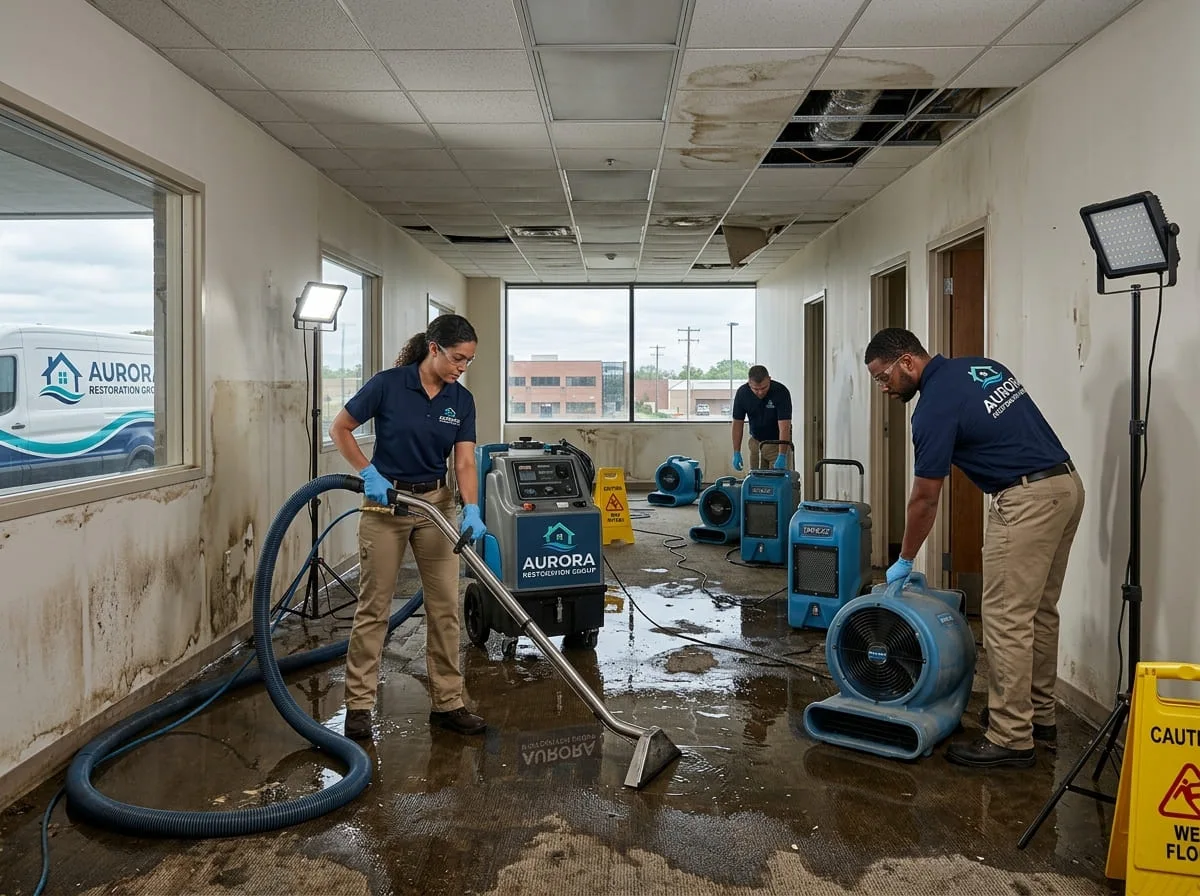
Sprinkler-suppressed fires can release large volumes of water across an open floor plan or multiple floors, often requiring more extensive extraction and drying than in a typical home.
Contents, Equipment, and Records
Inventory, electronics, documents, and specialized equipment usually need contents cleaning and pack-out, handled with an eye toward getting critical items back in service as soon as they're safe to use.
Rebuilding to Code
Commercial reconstruction has to account for current building and fire codes, which sometimes means upgrades beyond simply restoring what was there before. That work falls under fire damage repairs and reconstruction, carried out under a general contractor license.
Minimizing Business Interruption
Where it's safe and practical, restoration crews can sometimes work in phases, restoring parts of a building or specific systems so a business can resume limited operations before the entire project is finished. This isn't possible in every case, but it's worth discussing during the initial assessment.
Insurance and Business Records
Commercial policies often include business interruption coverage alongside property damage coverage, and documentation matters more here than in a typical homeowner claim. Insurance claim assistance is available through the restoration contractor, including detailed damage documentation to support both types of claims.
Commercial Properties Across the Denver Metro
Commercial fire response covers businesses throughout Aurora and into neighboring communities such as Denver, where similar mixes of retail, office, and light industrial space exist.
Working With Multiple Stakeholders
A commercial loss often involves more than one decision-maker: a property owner, a tenant, an insurance adjuster, and sometimes a property management company all need to stay informed as work progresses. Clear, regular communication about scope and timeline matters more when several parties are relying on the same information.
Multi-Tenant Buildings
When a fire affects a shared building, smoke and water damage frequently extend into neighboring units through shared walls, ceilings, or HVAC systems, even when those units saw no direct fire exposure. Assessing the full building rather than just the unit of origin helps avoid missed damage that surfaces later.
Getting Back to Normal Operations
Beyond the physical repairs, reopening a business after a fire often means coordinating with staff schedules, notifying customers, and in some cases working with vendors to replace damaged inventory or equipment on a workable timeline. Restoration crews typically focus on the property itself, while these operational pieces are usually managed by the business owner in parallel.
Specialized Equipment and Inventory
Commercial fires can affect specialized equipment, from kitchen appliances in a restaurant to servers and workstations in an office, that requires different handling than typical household contents. Assessing whether equipment can be cleaned and returned to service, versus needing replacement, is often a bigger factor in commercial timelines than the structural repairs themselves.
Perishable and Time-Sensitive Inventory
Businesses carrying perishable goods or time-sensitive inventory face an added layer of urgency, since delayed decisions about damaged stock can compound the financial impact of the fire itself.
Documentation for Business Interruption Claims
Business interruption coverage typically requires documentation beyond photographs of the physical damage, including records that establish lost income and ongoing expenses during the closure. Starting that documentation early, alongside the property damage claim, generally makes the overall insurance process smoother than trying to reconstruct financial records later.
Leased Spaces and Landlord Coordination
A business operating out of a leased space usually needs to coordinate restoration with the building owner in addition to its own insurance carrier, since the lease often splits responsibility between structural repairs and tenant improvements. Clarifying that split early avoids delays later in the project when repairs to the base building and repairs to tenant finishes need to happen in the right order.
How Commercial Fire Damage Fits the Broader Process
Every stage that applies to a residential fire, from emergency response to reconstruction, has a commercial equivalent with adjustments for scale. See the fire damage restoration overview for the full range of services.
Frequently Asked Questions
How is commercial fire restoration priced differently than residential?+
Commercial jobs are typically scoped around square footage, the type of contents and equipment involved, and any business interruption coverage, so pricing and scope vary more than a standard home claim.
Can part of my business reopen while restoration is still underway?+
Sometimes, if the damage is isolated to certain areas or systems. A phased approach is discussed during the initial assessment when it's a realistic option.
Does commercial fire restoration include code-required upgrades?+
Reconstruction work is done to current building and fire codes, which can mean some upgrades beyond restoring the property to its prior condition, particularly in older buildings.
Who handles inventory and equipment damaged in a commercial fire?+
Contents cleaning and pack-out covers inventory, electronics, and equipment, with cleaning and storage handled away from the active job site where needed.
Is 24/7 response available for commercial properties?+
Yes, emergency response for commercial fire damage is available around the clock, since a delayed response can extend both downtime and the extent of secondary damage.