
Why Basements and Crawl Spaces Top Aurora's Mold Calls
Basements — including unfinished basements used mainly for mechanical and storage space — are a standard feature of Colorado home construction across nearly every era and price point. That's different from regions where basements are rare, and it means below-grade moisture is a consistent factor in local water and mold damage patterns.
Unfinished Basements Are a Regional Norm
An unfinished basement often goes unchecked for long stretches between visits, especially in sections used only for storage. A slow seep or a small leak in that kind of space can sit undetected far longer than a leak in a finished, frequently used room.
Common Moisture Sources Below Grade
Foundation seepage, sump pump failures, water heater leaks, and washing machine hookups (often located in basements) are the most frequent sources restoration crews find. Crawl spaces add ground moisture and limited ventilation into the mix.
How Basement Moisture Reaches Mold-Prone Levels
Foundation Seepage After Heavy Rain or Snowmelt
Intense summer thunderstorms can overwhelm grading and drainage around a foundation, and Aurora has seen this kind of flash-flood rainfall before — the September 2013 Colorado floods brought over two inches of rain to the area in a six-hour window. Seepage from an event like that can linger in basement corners well after the storm passes.
Sump Pump and Drainage Failures
A sump pump that fails during a heavy rain event, loses power, or simply reaches the end of its service life can allow groundwater to accumulate quickly. Because sump pits are usually tucked into a basement corner, a failure isn't always noticed right away.
Frozen or Leaking Below-Grade Plumbing
Colorado's freeze-thaw-freeze pattern, often driven by chinook winds, is a recognized cause of pipe failures in the Denver metro area. Basement plumbing, particularly in older or less-insulated homes, is exposed to this cycle more directly than plumbing in heated living space.
Crawl Space Considerations
Ventilation and Vapor Barriers
Crawl spaces without an intact vapor barrier or adequate ventilation tend to hold ground moisture longer than open basements, which can create conditions favorable to mold on floor joists and subfloor even without a dramatic leak.
Limited Access Complicates Detection
Because crawl spaces are harder to inspect casually, moisture problems here often go unnoticed until an odor becomes noticeable indoors or a home inspection during a sale turns one up.
What Remediation Looks Like in These Spaces
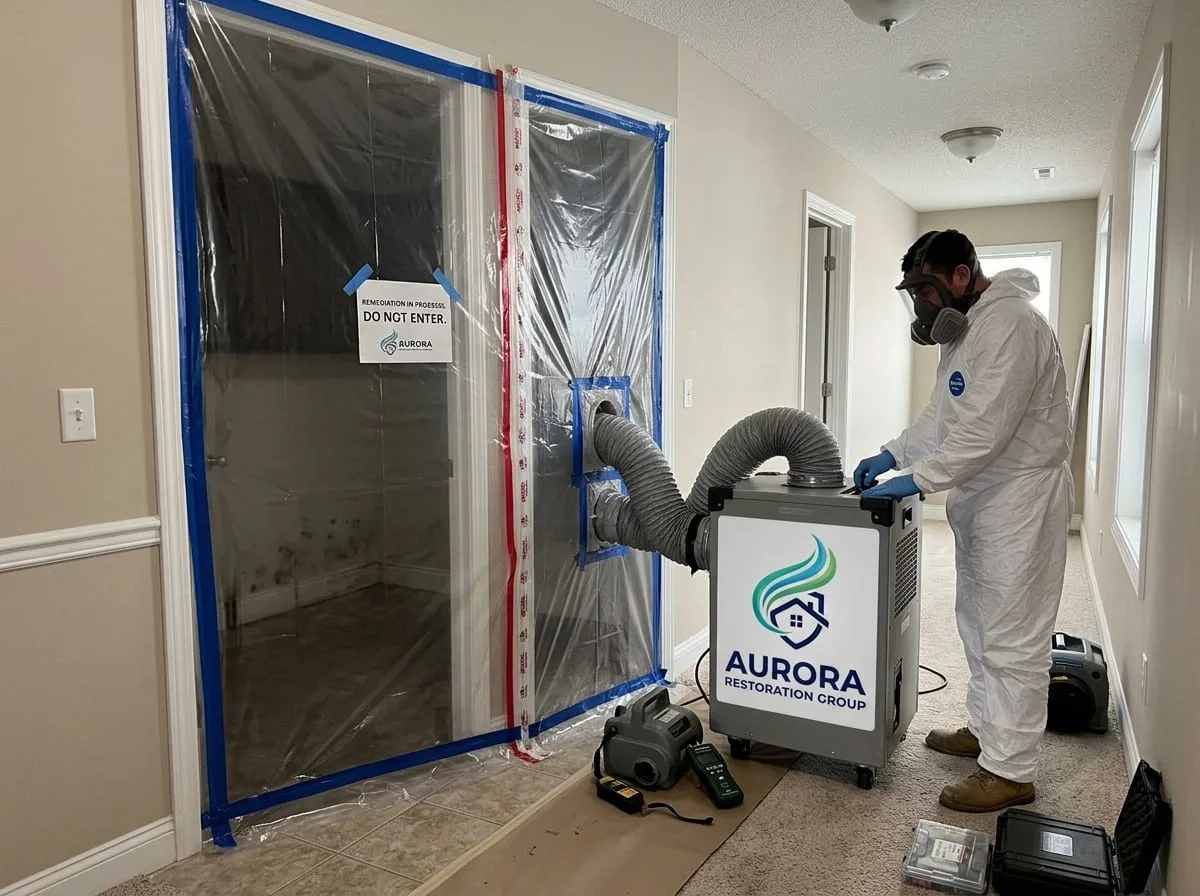
Restoration professionals typically contain the work area to limit spore migration to the rest of the home, then remove insulation, drywall, or subfloor sections that can't be reliably cleaned. Structural framing and non-porous surfaces are cleaned and treated, and the space is dried down with commercial dehumidification equipment.
For the water-damage side of a basement or crawl space event, see basement water damage cleanup and crawl space water damage, which cover extraction and drying before mold becomes a factor.
Older vs Newer Homes
Homes in Original Aurora and Downtown and mid-century neighborhoods like Hoffman Heights often have older basement plumbing and finishing materials that are more vulnerable to moisture problems. Newer master-planned communities still have basements, but generally with more modern waterproofing and plumbing behind them.
Whatever the home's age, a mold inspection is the right starting point whenever a basement or crawl space shows signs of past or ongoing moisture.
Signs Worth Checking in Your Basement or Crawl Space
Efflorescence and Staining on Foundation Walls
A white, chalky residue on concrete foundation walls (efflorescence) often signals that moisture has been moving through the concrete, even if the surface looks dry at the moment of inspection. It's frequently found alongside, or just before, visible mold growth nearby.
Musty Odor Near Floor Level
Because mold growth in basements and crawl spaces often starts at or below floor level — baseboards, subfloor, floor joists — a musty smell that's noticeably stronger near the floor is a useful clue even before anything is visible.
Condensation on Pipes and Ductwork
Cold water lines or ductwork that regularly develop condensation can drip onto surrounding materials over time, creating a slow, low-level moisture source that's easy to overlook compared to an obvious leak.
Preventing Recurrence After Remediation
Once a basement or crawl space has been remediated, addressing the original moisture source is what keeps the problem from coming back. That might mean improving exterior grading and downspout drainage, repairing or replacing a failing sump pump, or adding or repairing a vapor barrier in a crawl space.
The mold prevention and moisture control page covers ongoing steps property owners can take between remediation jobs to reduce the odds of a repeat event.
Storage and Use Habits That Affect Risk
Keeping Items Off the Floor
Storing boxes, furniture, and other belongings directly on a basement floor increases the chance they'll be damaged in even a minor seepage event, and can also trap moisture against the concrete where it's harder to notice and dry.
Ventilating Unfinished Spaces
Basements and crawl spaces with little air movement tend to hold moisture longer after any water event. Where finishing plans allow for it, some airflow through an unfinished space can help it dry faster than a sealed, stagnant area.
Finished vs Unfinished Basements
A finished basement with drywall, flooring, and framing hides moisture problems more effectively than an unfinished one, since materials that would be immediately visible in an open space are instead concealed behind finishes. This is worth keeping in mind if a finished basement has had any past water event, even one that seemed minor at the time.
Frequently Asked Questions
Are unfinished basements more prone to mold in Aurora?+
They can be, mainly because moisture in an unfinished, infrequently visited section of a basement often goes unnoticed longer than moisture in a finished, regularly used room. The basement itself isn't the cause; the delay in noticing a leak or seep usually is.
How do I know if my crawl space has a moisture problem?+
A musty odor noticeable inside the home, visible condensation on framing during an inspection, or a damaged or missing vapor barrier are common indicators. Because crawl spaces are hard to check casually, a professional inspection is often the most reliable way to know.
Can basement mold be remediated without removing all the drywall?+
Sometimes. It depends on how long materials were wet and how far moisture traveled. Non-porous surfaces can often be cleaned and treated, while drywall, insulation, or subfloor that stayed wet too long may need to be removed.
Does a sump pump failure count as a covered water damage event?+
Coverage varies by policy, and sump pump failure is one of the more commonly excluded or limited scenarios in standard homeowners policies, though some carry a sump pump or water backup endorsement. The receiving contractor can help you understand documentation needed for a claim.
How long does basement mold remediation take?+
It depends on the size of the affected area and how many materials need removal versus cleaning. A contained, localized job may take a few days, while a larger seepage event affecting multiple walls can take longer.