What "Black Mold" Means to Aurora Homeowners
"Black mold" is a term most people use for any dark-colored mold growth they find in their home, regardless of what it actually is. It's a useful shorthand in everyday conversation, but it isn't a precise identification, and it shouldn't be treated as one when deciding how to respond.
Color Isn't a Reliable Identifier
Several different mold species can appear dark green, gray, or black depending on the surface, lighting, and moisture level. Determining what's actually growing requires sampling and lab analysis rather than a visual guess, which is why testing is often recommended before assuming the worst or, just as often, assuming it's nothing to worry about.
Why the Term Causes Concern
Dark mold growth is naturally alarming to see, especially in a living space. The right response is a calm, factual one: identify the moisture source, have the area assessed, and let testing and remediation professionals determine the appropriate scope of work rather than reacting to color alone.
Where Dark Mold Growth Typically Appears After a Water Event
Around Prior Leak Sites and Water Stains
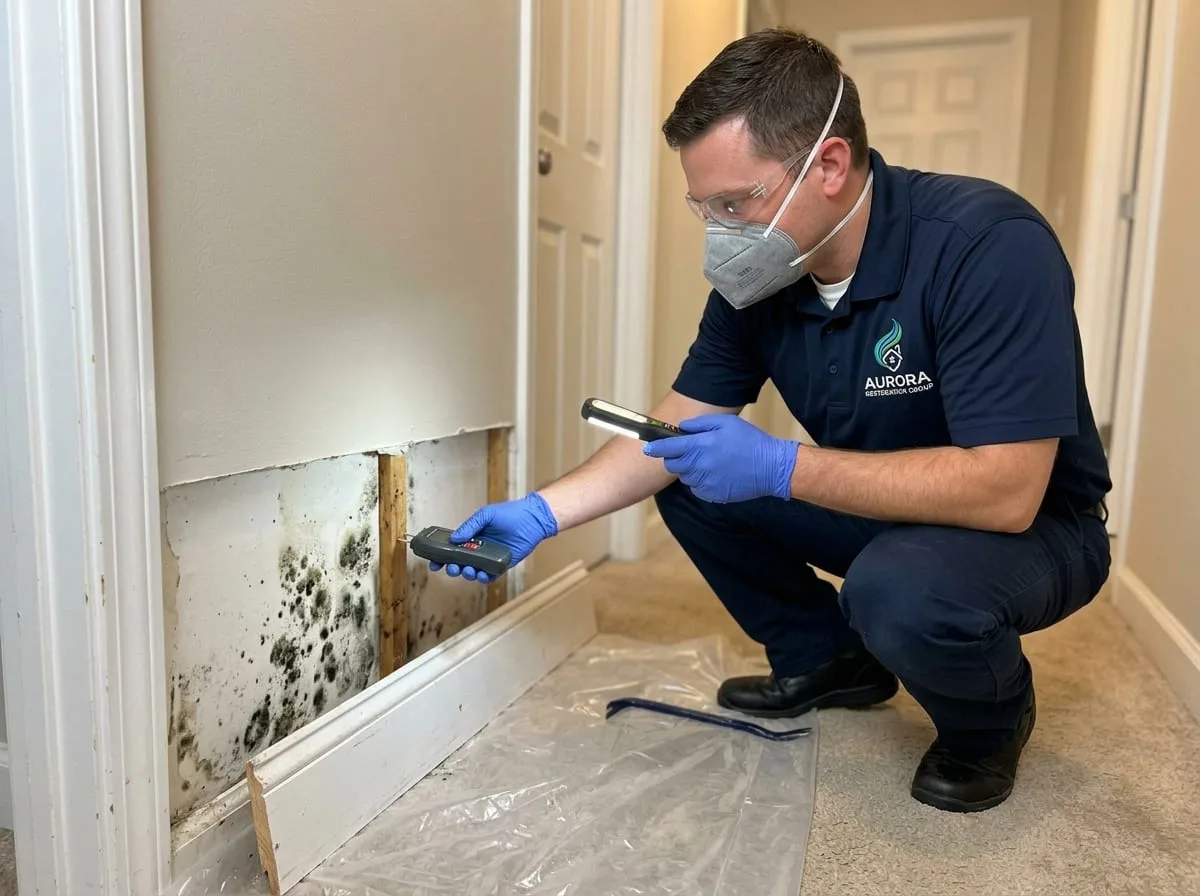
Dark, speckled growth commonly shows up around old water stains on drywall, baseboards, or ceiling tiles — areas that got wet once and never fully dried, or that have had a slow, recurring leak nearby.
Basements, Crawl Spaces, and Bathrooms
These are the areas of an Aurora home most likely to hold moisture long enough for visible growth to develop, whether from basement seepage, a slow plumbing leak, or ordinary bathroom humidity combined with inadequate ventilation. See the page on basement and crawl space mold remediation for more on below-grade situations specifically.
Testing Before Assuming the Worst
Because appearance alone doesn't confirm species, sampling is the reliable way to know what's present and how extensive the growth is. The mold testing and sampling page covers the methods used, including air and surface sampling, and how results factor into the remediation plan.
A mold inspection is usually the first step, since it determines whether sampling is even necessary or whether the visible growth and moisture evidence are enough to proceed straight to remediation.
Remediation Approach for Suspected Black Mold
Regardless of species, the remediation approach for dark mold growth follows the same core principles as any other mold job: contain the area first, remove porous materials that can't be reliably cleaned, treat remaining surfaces, and dry the space thoroughly. Technicians typically use appropriate personal protective equipment and negative-air containment when working in an affected area.
Once the visible growth and underlying moisture are addressed, post-remediation verification confirms the work was effective. See post-remediation verification and clearance testing for what that final step involves.
A Note on Health Concerns
Mold exposure affects people differently, and specific health guidance should come from a medical professional rather than a restoration website. What restoration professionals can control is addressing the moisture source, removing affected materials appropriately, and verifying the work is complete.
Common Misconceptions About Dark Mold
"A Small Spot Isn't Worth Addressing"
A small area of visible growth can still indicate a larger moisture problem behind a wall or under flooring. The visible spot is often just the part that's reached the surface, not the full extent of the issue.
"Painting Over It Solves the Problem"
Paint, including mold-resistant paint, can cover discoloration temporarily, but it doesn't remove existing growth or address the moisture feeding it. Growth can resurface, or spread further, if the underlying cause isn't corrected first.
"If It's Not Black, It's Not a Concern"
Any mold growth, regardless of color, indicates a moisture problem worth addressing. Focusing only on dark-colored growth can mean overlooking other affected areas that need the same attention.
When to Call a Professional
Any visible mold growth larger than a small, isolated spot, growth connected to a known water event, or a musty odor without an obvious source are all good reasons to have a property assessed rather than attempting to address it without professional input. See mold remediation services for the full range of options available.
Containment and Safety During Remediation
Isolating the Work Area
Plastic sheeting and negative-air machines are used to seal off the space being remediated, which keeps spores generated during removal work from spreading to unaffected rooms.
Personal Protective Equipment
Technicians typically wear respirators, gloves, and protective clothing appropriate to the scope of the job, particularly during demolition and removal of affected materials, when disturbed spores are most likely to become airborne.
Managing Debris Removal
Affected materials removed during remediation are bagged and sealed before being carried out of the containment area, reducing the chance of spreading debris or spores through the rest of the property.
Dark Mold in Different Rooms
The remediation approach adjusts somewhat by location. Bathroom growth around grout and caulk is often more contained than basement growth affecting drywall and framing, while attic growth after a roof leak may involve insulation removal in addition to surface treatment.
What a Finished Job Looks Like
Once remediation is complete, affected materials that couldn't be cleaned have been removed and replaced or left ready for reconstruction, remaining surfaces have been treated, and the space has been dried to appropriate levels. Any odor associated with the original growth should no longer be present.
For jobs where documented confirmation matters — before closing up walls, listing a property, or satisfying an insurer — post-remediation testing provides that record. See post-remediation verification and clearance testing for how that final step works.
Frequently Asked Questions
Is "black mold" more dangerous than other mold?+
Dark color alone doesn't tell you what species is present or how it will affect a given individual. Rather than relying on appearance, testing identifies what's actually growing, and any specific health questions are best directed to a medical professional.
How can I tell if mold is really "black mold" without testing?+
You can't reliably tell from color and appearance alone, since several mold species can look dark on different surfaces. Sampling and lab analysis are the only way to confirm what's present.
Do I need to leave my home during black mold remediation?+
It depends on the size and location of the affected area. Contained, localized work often allows occupants to stay in unaffected parts of the home, while more extensive remediation may call for temporary relocation during the work.
Can black mold be cleaned with bleach instead of professional remediation?+
Surface cleaning with household products may address small, isolated spots on non-porous surfaces, but it doesn't address moisture trapped in porous materials like drywall or insulation, and it won't resolve an underlying leak. Professional remediation addresses both the growth and its source.
Is post-remediation testing required after black mold removal?+
It isn't universally required, but many property owners choose clearance testing to confirm the remediation was effective, especially before closing up walls or listing a property for sale.