
South Aurora Growth, Suburban Housing Stock
Seven Hills and Mission Viejo sit within the wave of residential development that filled in south Aurora from the 1990s into the 2010s, part of the same general growth period that produced neighboring communities like Murphy Creek and Southshore as the city expanded toward E-470. Housing in this part of Aurora tends to be single-family suburban construction, generally built with more modern plumbing standards than the tract housing found in central Aurora decades earlier.
What Modern Construction Changes -- and What It Doesn't
Newer supply lines reduce the odds of a slow pinhole leak from decades-old galvanized pipe, but they don't remove water damage risk altogether. Water heaters fail regardless of a home's age once they reach the end of their service life. Washing machine hoses, dishwasher connections, and refrigerator icemaker lines are common leak points in any era of home. And Colorado's wide temperature swings can still stress plumbing in exposed locations like garages and exterior walls during a hard freeze.
Storm Exposure Doesn't Change With Construction Date
Seven Hills and Mission Viejo sit inside the same Hail Alley corridor that covers the entire Denver-Aurora area, meaning hail and high wind are as much a factor here as anywhere else in the city. Severe storm season runs roughly April through September, and hail damage to roofing frequently isn't discovered until a subsequent rainstorm reveals a leak that wasn't visible from the ground.
How the Response Works
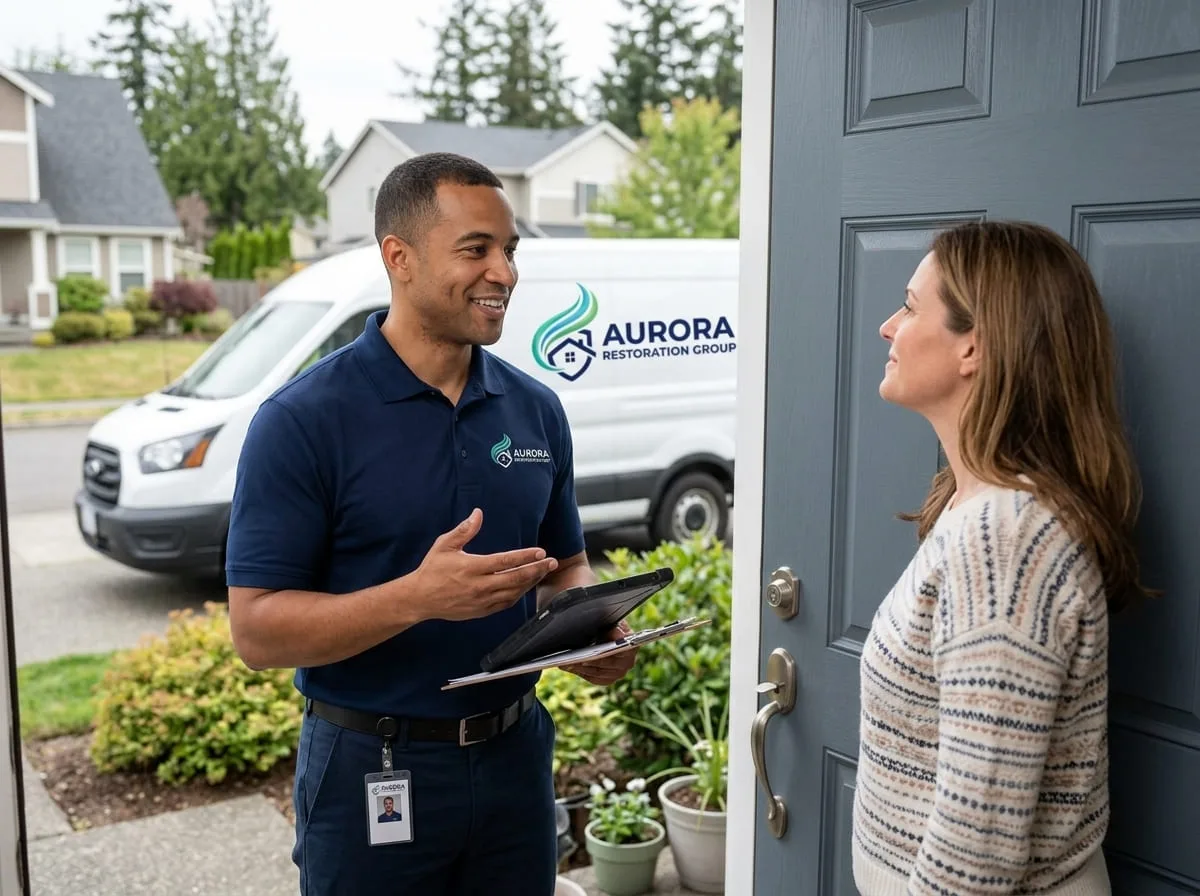
A call from Seven Hills or Mission Viejo is routed to insured, IICRC-certified restoration professionals equipped for around-the-clock emergency response. Once on site, the priority is water extraction to remove standing water before it spreads into subfloor and wall cavities.
Drying, Monitoring, and Repair Coordination
After extraction, structural drying and dehumidification equipment targets the materials that absorbed moisture, with follow-up moisture checks to confirm they're actually drying through rather than just appearing dry at the surface. If flooring, drywall, or cabinetry can't be salvaged, that's addressed honestly rather than assuming everything can be dried in place -- some materials do need to come out.
Roofing After a Decade or Two of Storms
A roof installed when Seven Hills or Mission Viejo were first built has now weathered many hail seasons, including the region's two costliest recorded hailstorms in 2017 and 2024. Even a roof that was replaced or repaired after one of those events can still be due for another inspection, since shingle wear accumulates gradually and isn't always tied to a single dramatic storm.
Gutters and Drainage
Aging gutters and downspouts that no longer direct water away from the foundation effectively are a frequently overlooked contributor to basement moisture, particularly after the kind of heavy, fast-moving thunderstorms common to this part of Colorado in late spring and summer.
Basements Remain a Common Factor
As with most Colorado homes, basements -- finished and unfinished -- are common throughout Seven Hills and Mission Viejo, and they're frequently where water damage from a supply line failure or storm-related seepage first shows up. Basement water damage cleanup addresses the slower airflow and higher ambient moisture that make below-grade drying different from an above-grade room.
Residential and Commercial Service
Coverage in this area is primarily residential, though nearby commercial and multi-family properties fall under the same commercial water damage restoration dispatch. The same network also connects property owners with mold remediation and fire damage restoration when storm or water damage overlaps with those concerns.
Common Causes Worth Knowing
Beyond hail, the storm-related concern most relevant to these neighborhoods is heavy rain intrusion, particularly during Aurora's April-through-September severe weather season when intense downpours can arrive quickly. See storm and rain water damage for more on how that type of event is typically approached.
Appliance and Fixture Failures
Because Seven Hills and Mission Viejo were built during a period when open floor plans and modern kitchen and laundry setups became standard, appliance density per household is higher than in older Aurora housing. More appliances connected to water lines means more potential points of failure, even when the plumbing itself is in good condition.
What to Do First
If you discover a leak, shutting off the water at the source and avoiding contact with standing water near outlets reduces both property damage and safety risk before a crew arrives. The guidance in what to do immediately after finding water damage covers next steps in more detail.
Nearby Areas
The same 24/7 line also serves Heather Ridge and Murphy Creek. Check the full Aurora, CO service area coverage for other nearby neighborhoods.
Frequently Asked Questions
Do newer homes in Seven Hills and Mission Viejo still get pipe leaks?+
Yes. Modern supply lines reduce some risks tied to aging galvanized pipe, but leaks from water heaters, washing machine hoses, dishwasher connections, and icemaker lines occur in homes of any age.
How does hail damage lead to water damage in these neighborhoods?+
Hail can crack shingles, damage flashing, or compromise skylight seals without an obvious hole. That damage often isn't noticed until a later rainstorm allows water to enter the attic, ceiling, or interior walls.
Can every material affected by water damage be saved?+
Not always. Some materials, like saturated drywall, certain flooring types, or cabinetry that's absorbed significant moisture, may need to be removed rather than dried in place. An honest assessment on site determines what can be restored versus what needs replacement.
Is mold a concern after a water leak in a finished basement?+
It can be, particularly if moisture sits for more than a day or two before drying begins. Mold inspection, testing, and remediation are available if a water event raises that concern.